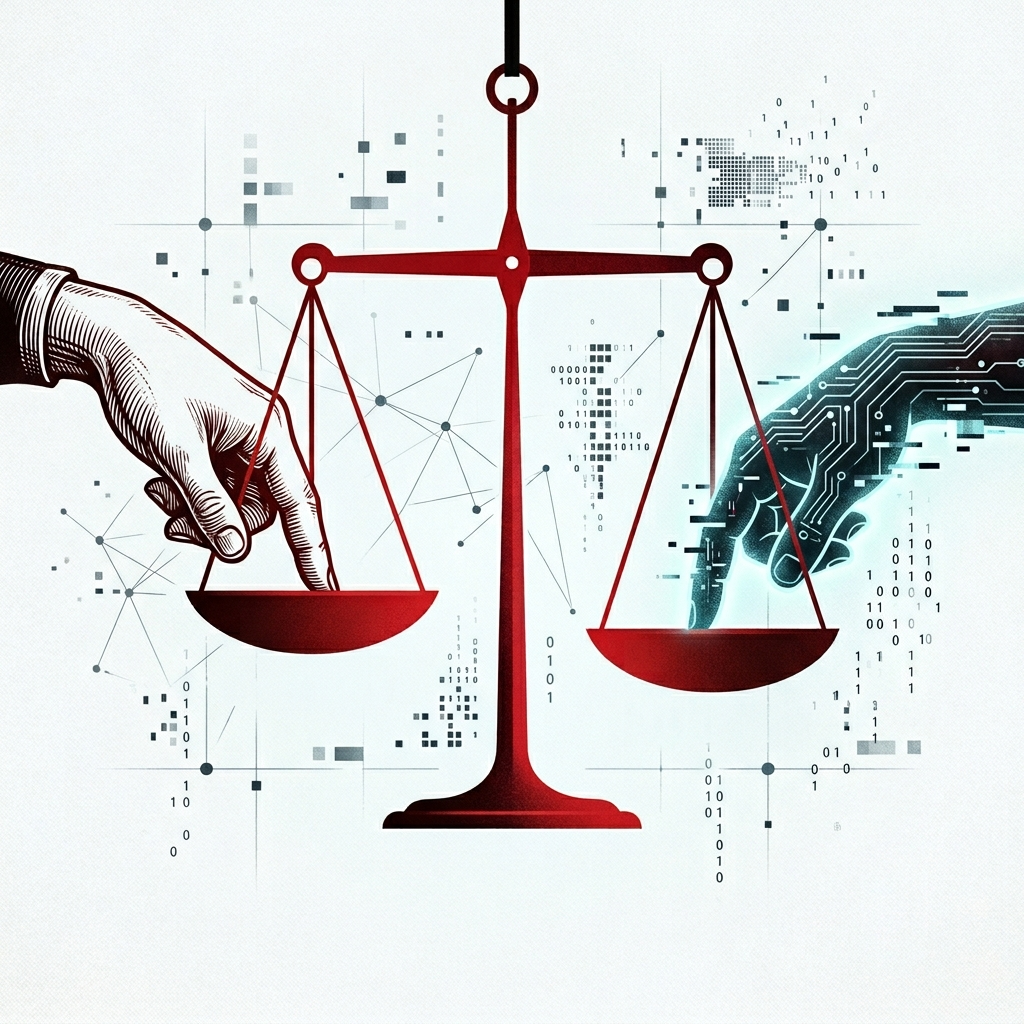
How the Internet Broke Everyone’s Bullshit Detectors: The AI and Data Reality

The internet broke everyone’s bullshit detectors, and the consequences are reshaping how society processes information in the age of artificial intelligence. What once seemed like a reliable tool for distinguishing fact from fiction has devolved into a landscape where verification feels nearly impossible, trust in digital content has eroded, and skepticism fatigue leaves millions unable to discern reality from fabrication.

The flood of AI-generated content has overwhelmed traditional mechanisms for establishing truth online. Machine learning models now produce text, images, and video at a scale and speed that human fact-checkers cannot match. Deepfakes, synthetic news articles, and algorithmically optimized misinformation spread faster than corrections, creating an environment where authenticity becomes a scarce commodity. The problem extends beyond isolated hoaxes: entire information ecosystems now operate on content that may never have been touched by human hands.

This crisis of verification is compounded by unexpected technical constraints. Restricted access to geospatial satellite and drone data has made it harder to independently confirm events on the ground. Governments and private companies control high-resolution imagery that could help validate claims about natural disasters, military conflicts, or environmental changes. When verification tools rely on data locked behind paywalls or security classifications, the public loses a critical resource for independent corroboration.

Emerging agentic AI systems promise a potential solution by automating the verification process itself. These autonomous models can cross-reference multiple data sources, analyze metadata, and flag inconsistencies in near real-time. Unlike passive content moderation tools, agentic AI operates proactively, scanning for signs of manipulation before misinformation reaches critical mass. Projects such as Google’s Antigravity initiative are exploring how machine learning can identify synthetic media by detecting subtle artifacts invisible to the human eye.

Yet autonomous verification introduces its own risks. If AI systems become the primary arbiters of truth, who audits the algorithms? The same technology that detects deepfakes can be weaponized to suppress legitimate content or reinforce existing biases embedded in training data. Transparency in how these models make decisions remains limited, and the concentration of verification infrastructure in the hands of a few tech giants raises questions about accountability.

The integration of AI-driven search technologies into platforms such as Google and Bing has accelerated the shift toward real-time content authenticity checks. Search engines now prioritize signals of trustworthiness, such as E-E-A-T (Experience, Expertise, Authoritativeness, Trustworthiness), but these metrics are themselves vulnerable to gaming. As AI-generated content becomes more sophisticated, distinguishing between authentic expertise and algorithmically optimized imitation grows harder.

Human digital literacy remains the most critical defense against the collapse of reliable information. Teaching individuals to recognize manipulation techniques, understand data provenance, and question source credibility can mitigate some damage. However, digital literacy programs struggle to keep pace with the speed of technological change. By the time educators update curricula to address one form of misinformation, adversaries have already moved on to new tactics.

Skepticism fatigue compounds the challenge. Constant exposure to conflicting narratives and the cognitive load of evaluating every piece of information leads many to disengage entirely or retreat into echo chambers where verification feels unnecessary. This erosion of critical engagement creates fertile ground for coordinated disinformation campaigns that exploit exhaustion and polarization.

The role of AI software disruption extends beyond content creation to the infrastructure that supports verification. Companies developing authentication tools face pressure to balance accuracy with scalability, often sacrificing nuance for speed. Automated systems flag false positives, suppressing legitimate speech, while sophisticated bad actors engineer content designed to evade detection.

Ethical frameworks for AI verification tools are urgently needed to govern how these systems operate. Industry-led initiatives have proposed guidelines emphasizing transparency, human oversight, and the right to appeal automated decisions. Yet voluntary standards lack enforcement mechanisms, and regulatory efforts lag behind the pace of innovation. The absence of international consensus on verification standards allows bad actors to exploit jurisdictional gaps.

Collaborative solutions offer the most promising path forward. Partnerships between technology companies, academic researchers, civil society organizations, and government agencies can pool resources and expertise. Open-source verification tools reduce dependence on proprietary systems and enable independent audits. Crowdsourced fact-checking platforms harness collective intelligence, though they require robust mechanisms to prevent coordinated manipulation.

The economic implications cannot be ignored. Trust is a currency in digital markets, and its devaluation threatens industries from journalism to e-commerce. Platforms that fail to address verification challenges risk losing users to competitors that offer more reliable environments. Meanwhile, workforce disruptions driven by AI automation add another layer of instability as entire categories of verification-related jobs face obsolescence.

Restoring digital trust requires integrated approaches that combine technological innovation, human judgment, and institutional accountability. Agentic AI verification systems must operate transparently, with clear oversight and mechanisms for redress when errors occur. Digital literacy initiatives need sustained investment and adaptation to keep pace with evolving threats. Ethical governance frameworks must move from aspiration to enforcement, establishing consequences for those who undermine information integrity.

The challenge of fixing broken bullshit detectors is fundamentally about rebuilding the social contract for the digital age. Technology alone cannot solve a problem rooted in human behavior and institutional failure. Only by addressing the full spectrum of factors—from algorithmic accountability to media literacy to international cooperation—can society hope to restore confidence in the information that shapes public discourse and private decisions alike.
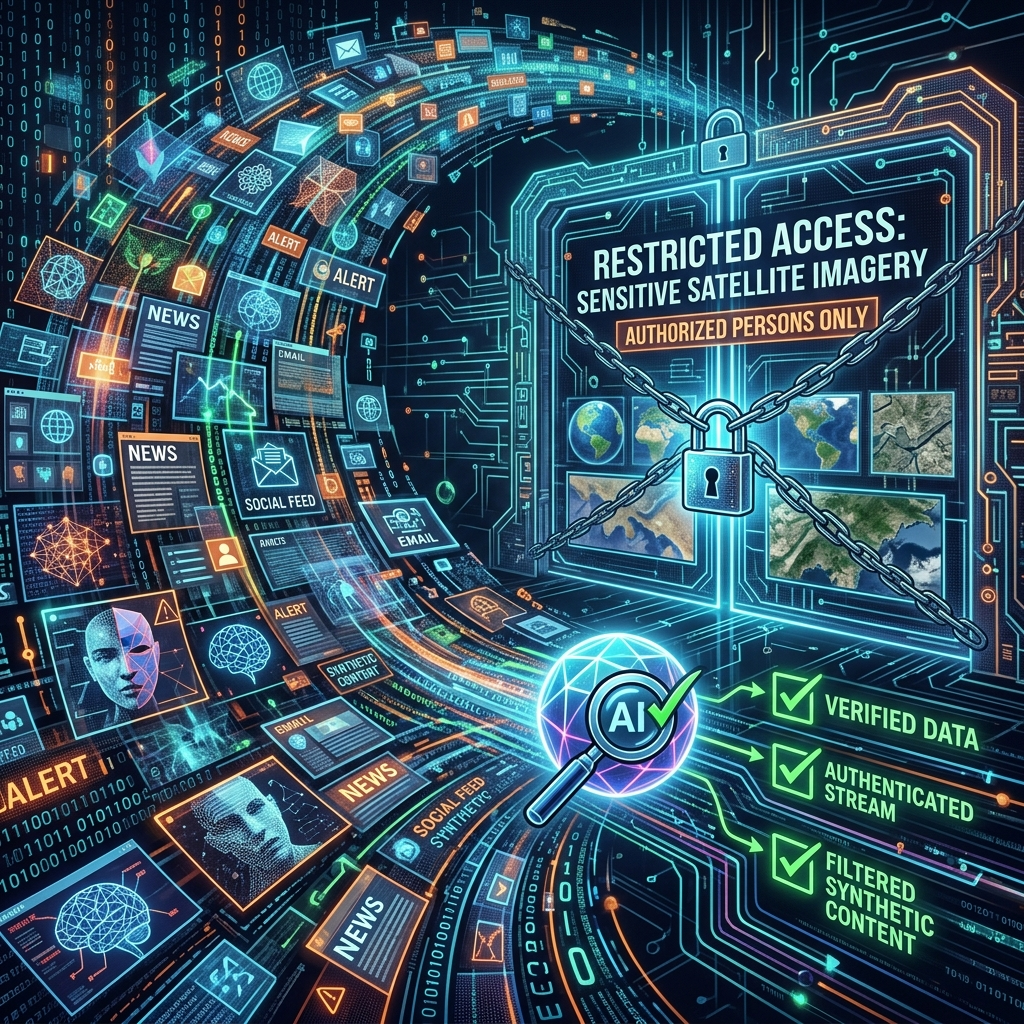
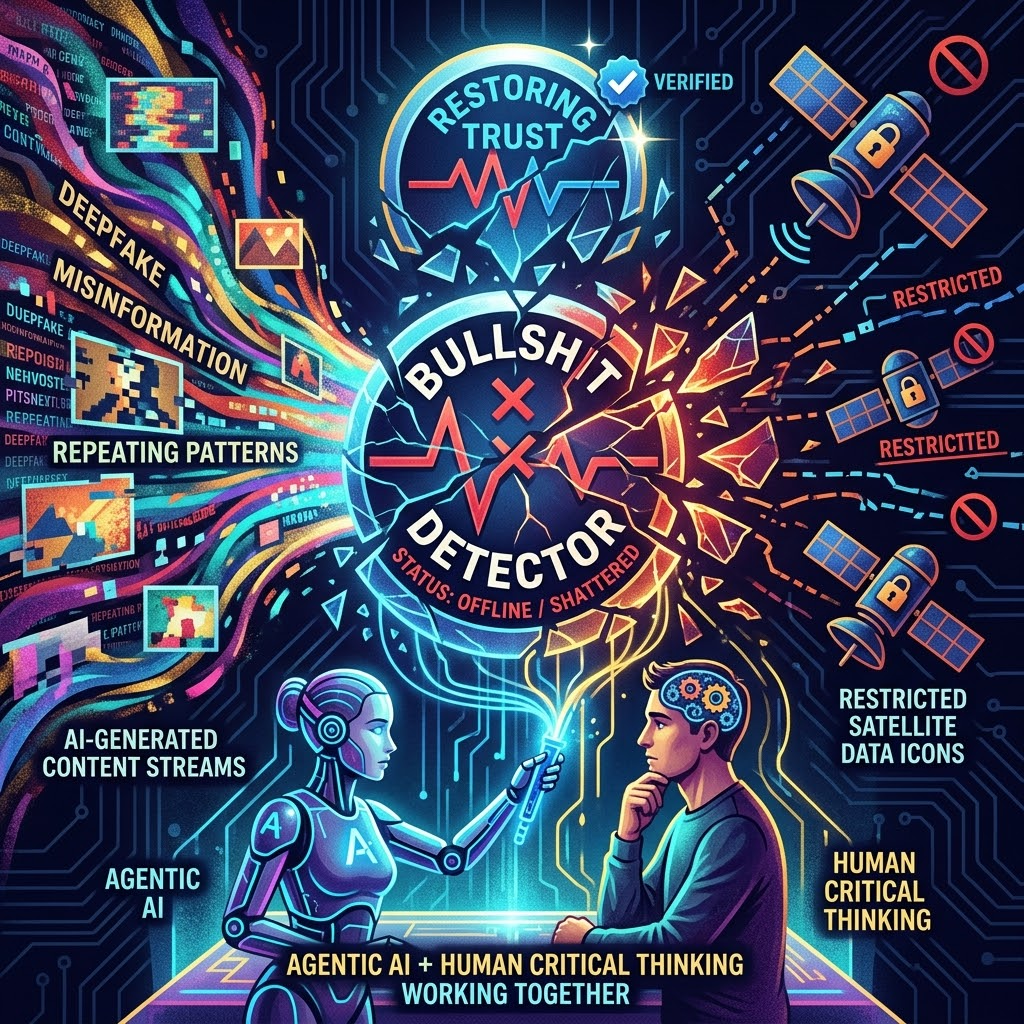
How the Internet Broke Everyone’s Bullshit Detectors: The AI and Data Reality

The internet broke everyone’s bullshit detectors, and the culprits are synthetic AI content floods and tightening geospatial data restrictions that make independent verification nearly impossible. What began as a democratization of information has devolved into a fog of deepfakes, fabricated imagery, and locked-down satellite feeds that leave even seasoned experts second-guessing reality. The result is a collective skepticism fatigue where people either believe everything or trust nothing at all.

AI-generated content now saturates every corner of the web, from convincing fake product reviews to entirely synthetic news stories that mimic journalistic credibility. The sheer volume overwhelms human capacity to fact-check, and traditional verification methods collapse under the weight of content that looks, sounds, and reads like the real thing. Large language models can generate thousands of plausible narratives in seconds, each tailored to exploit cognitive biases and emotional triggers.

This explosion creates what researchers call verification overload, where the cost of confirming authenticity exceeds the value of the information itself. Social media platforms struggle to flag misleading content faster than it spreads, and users grow numb to warning labels that appear on half the posts they encounter. Trust in digital media erodes not because people lack critical thinking skills, but because the baseline assumption that most content is genuine no longer holds.

Geospatial data access restrictions compound the problem by cutting off independent verification routes that once served as checks on official narratives. Governments and private companies increasingly limit satellite imagery, drone footage, and mapping data under national security or commercial pretexts. When a conflict zone image surfaces online, citizens and journalists cannot cross-reference it with freely available geospatial sources the way they could a decade ago.

Projects such as Wing’s drone delivery service highlight how commercial interests prioritize proprietary control over transparency, restricting public access to aerial data that could validate or debunk claims about infrastructure, environmental damage, or human rights abuses. The result is a verification bottleneck where only well-funded institutions retain the tools to separate truth from fabrication, leaving ordinary users in the dark.

Emerging agentic AI verification models offer a potential counterbalance by functioning as autonomous fact-checkers that parse metadata, trace content provenance, and cross-reference claims against verified databases in real time. These systems operate continuously without human fatigue, identifying synthetic artifacts in images, analyzing linguistic patterns that betray machine authorship, and flagging inconsistencies across multiple sources. AI-driven search technology is evolving to integrate these verification layers directly into information retrieval, so users receive trust scores alongside search results.

Google’s Antigravity project exemplifies this shift, deploying machine learning models that assess content authenticity before it reaches end users. The initiative uses multimodal analysis to detect manipulated videos, altered photos, and text generated by language models, then surfaces verified alternatives when available. While still experimental, Antigravity represents a blueprint for embedding verification into the infrastructure of the internet itself rather than treating it as an afterthought.

Yet technology alone cannot restore functional bullshit detectors without parallel investments in digital literacy and human oversight. Automated systems make errors, inherit biases from training data, and can be gamed by adversarial actors who reverse-engineer detection algorithms. Users need foundational skills to interpret verification signals, understand probabilistic confidence scores, and recognize when to seek expert judgment rather than defer entirely to algorithmic verdicts.

Educational initiatives must emphasize media literacy as a core competency, teaching people to trace information back to primary sources, assess the credibility of publishers, and identify hallmarks of synthetic content such as unnatural lighting in images or repetitive phrasing in text. AI software disruption impacting systems across industries underscores the urgency, as misinformation spreads faster in sectors from healthcare to finance where stakes are highest.

Ethical AI governance frameworks are equally critical to prevent verification tools from becoming instruments of censorship or state control. Models trained to flag misinformation can just as easily suppress dissent or amplify official propaganda if designed without transparency and accountability safeguards. Independent audits, open-source verification code, and diverse stakeholder input must shape how these systems define truth and allocate credibility.

Cross-sector collaboration offers the most viable path forward, uniting tech platforms, newsrooms, academic institutions, and civil society organizations around shared standards for content authenticity and data access. Industry consortia are developing cryptographic watermarking protocols that embed origin metadata into digital files at creation, making tampering detectable downstream. Journalists and researchers are pooling resources to maintain public geospatial databases that fill gaps left by commercial restrictions.

These collaborative frameworks also address workforce displacement concerns, as AI-driven job cuts by 2026 threaten roles in content moderation and fact-checking. Reskilling programs can transition displaced workers into oversight positions that monitor algorithmic performance, adjudicate edge cases, and maintain the human judgment layer essential for nuanced verification decisions.

Rebuilding trust in digital information requires a multipronged strategy that marries autonomous verification technologies with robust digital literacy programs and transparent governance structures. The internet broke everyone’s bullshit detectors through an unprecedented combination of synthetic content proliferation and restricted access to verification tools, but the same technologies driving the crisis also hold the keys to recovery. Success depends on treating verification not as a technical problem to be solved in isolation, but as a sociotechnical challenge demanding coordinated action across institutions, disciplines, and borders. Only by integrating intelligent systems with educated users and accountable oversight can we restore the ability to distinguish signal from noise in an increasingly synthetic information landscape.

How the Internet Broke Everyone’s Bullshit Detectors: The AI and Data Reality

The internet broke everyone’s bullshit detectors, and the evidence is overwhelming. Synthetic media now floods every platform, satellite imagery access faces new restrictions, and the tools we once trusted to separate truth from fiction are failing at an unprecedented scale. The problem isn’t just that misinformation exists—it’s that our collective ability to identify it has collapsed under the weight of technological disruption.

AI-generated content has become virtually indistinguishable from human-created material, eroding the foundation of digital trust. Text, images, video, and audio can now be fabricated with tools accessible to anyone with an internet connection. Deepfakes have evolved from novelty to weapon, deployed in contexts ranging from political manipulation to financial fraud. When every piece of content carries the potential to be synthetic, skepticism becomes the default mode, and exhaustion follows close behind.

The scale of this content explosion overwhelms traditional fact-checking mechanisms. Human moderators and legacy verification systems cannot keep pace with the volume of material requiring review. Social platforms struggle to label synthetic content consistently, and even when labels appear, users often ignore them or distrust the labeling authority itself. The result is a digital ecosystem where authenticity has become nearly impossible to verify at speed.

Geospatial data restrictions compound the verification crisis in unexpected ways. Satellite and drone imagery once provided an independent layer of truth, offering visual confirmation that could cut through narrative disputes. Now, access to high-resolution geospatial data faces tightening controls due to national security concerns, privacy regulations, and commercial gatekeeping. When fact-checkers cannot independently verify claims about physical events or environmental changes through satellite imagery and geospatial verification tools, another critical verification pathway closes.

These restrictions create information asymmetries that favor powerful institutions while leaving journalists, researchers, and citizens without the tools to challenge official narratives. Events occurring in remote regions or contested territories become harder to document independently. The gap between what governments and corporations can see versus what the public can verify widens, feeding conspiracy theories and undermining institutional credibility.

Agentic AI verification models represent a potential counterweight to synthetic content proliferation. These autonomous systems can analyze content at machine speed, cross-reference claims against vast databases, and identify inconsistencies that human reviewers might miss. Unlike passive AI tools that wait for human prompts, agentic models operate independently to flag suspicious content, trace information provenance, and assess credibility scores based on multiple signals.

The technology behind these verification agents draws on advances in AI-driven search technology, enabling real-time fact-checking across multiple sources. Early implementations show promise in detecting coordinated inauthentic behavior, identifying manipulated media, and mapping misinformation networks. However, these systems face their own credibility challenges—who trains them, what biases they encode, and whether they can be trusted to make consequential judgments about truth.

The opacity of AI verification models raises fundamental questions about accountability. When an autonomous system flags content as false or suspicious, users need transparency about the reasoning behind that determination. Without explainability, AI verification risks becoming another black box that users either blindly trust or reflexively reject. The irony of using AI to combat AI-generated misinformation is not lost on skeptics who see an arms race with no clear winners.

Human digital literacy remains the essential complement to technological solutions. No verification system, however sophisticated, can function effectively if users lack the skills to interpret its outputs critically. Digital literacy programs must evolve beyond basic media literacy to address the specific challenges of synthetic content, algorithmic curation, and AI-powered search platforms reshaping information access.

Skepticism fatigue presents a particularly dangerous dimension of the broken detector phenomenon. When everything requires verification and verification itself becomes exhausting, many users simply disengage or retreat into trusted echo chambers. This withdrawal from critical evaluation makes populations more vulnerable to manipulation, not less. Effective digital literacy must teach not just how to verify information, but how to manage cognitive load and maintain engagement without burnout.

Ethical AI development practices intersect directly with verification credibility. Systems trained on biased datasets or designed without diverse input will reproduce and amplify existing prejudices in their truth assessments. The disruption AI software brings to existing systems includes the potential to embed verification biases at scale, making them harder to detect and correct than human biases. Transparent development processes, diverse training data, and ongoing audits become essential safeguards.

Collaborative strategies offer the most realistic path toward restoring functional bullshit detectors. Platform companies, fact-checking organizations, academic institutions, and civil society groups must coordinate rather than compete. Shared databases of known synthetic content, standardized labeling protocols, and open-source verification tools can create network effects that individual actors cannot achieve alone. Cross-sector collaboration also distributes the trust burden, reducing dependence on any single gatekeeper.

These partnerships face significant obstacles, including competitive incentives, jurisdictional conflicts, and ideological disagreements about what constitutes misinformation. Despite these challenges, pilot programs demonstrate that coordinated responses can identify and contain viral falsehoods faster than siloed efforts. The key is designing systems that preserve editorial independence while enabling technical interoperability. Verification networks must resist both centralized control and fragmentation into incompatible fiefdoms.

Workforce implications add another layer of urgency to the verification crisis. As organizations recognize the scale of the challenge, demand grows for professionals skilled in AI auditing, synthetic media detection, and digital forensics. The emergence of AI agents in search and content curation reshapes entire industries, requiring rapid workforce adaptation. Educational institutions struggle to develop curricula for roles that didn’t exist five years ago, while professionals face pressure to acquire verification skills alongside domain expertise.

The economic dimension cannot be ignored. Misinformation carries measurable costs through market manipulation, fraudulent schemes, and reputational damage. Businesses increasingly recognize that trust is infrastructure, not marketing. Investment in verification capabilities becomes a competitive necessity rather than a compliance checkbox. This shift drives innovation but also raises concerns about verification becoming a luxury good available only to well-resourced organizations, while smaller entities and individual users remain vulnerable.

Regulatory frameworks lag dangerously behind technological reality. Policymakers debate liability standards, transparency requirements, and content moderation obligations while the landscape they’re attempting to regulate transforms beneath them. Effective regulation must balance platform accountability with free expression protections, incentivize good-faith verification efforts, and impose consequences for negligent or malicious behavior. The challenge is crafting rules flexible enough to accommodate rapid innovation while establishing clear boundaries against harmful practices.

Restoring functional bullshit detectors requires integrated technological and human oversight working in concert. No single solution—whether agentic AI, digital literacy programs, or platform policy changes—can address the multifaceted nature of the crisis alone. The path forward demands sustained investment in verification infrastructure, commitment to transparency and accountability, and recognition that trust is a public good requiring collective maintenance. The internet may have broken our detectors, but the tools to rebuild them exist if we can summon the coordination and will to deploy them effectively.

How the Internet Broke Everyone’s Bullshit Detectors: The AI and Data Reality

The internet broke everyone’s bullshit detectors by overwhelming traditional truth verification systems with an unprecedented surge of AI-generated synthetic content and restricted access to crucial geospatial data. This dual pressure has created a crisis of trust, where users struggle to distinguish authentic information from convincingly crafted fabrications at scale.

Generative AI models, such as GPT and deepfake technologies, have unleashed a tidal wave of hyperrealistic yet fabricated content that overwhelms traditional authenticity signals. These synthetic outputs erode trust by making it increasingly difficult for individuals and verification platforms to distinguish between genuine information and convincingly crafted fabrications. The sophistication of these tools has reached a point where even trained observers can be fooled by synthetic images, videos, and text that mimic human-created content with alarming precision.

Training AI on vast and often biased datasets leads to narratives that appear authentic to the average observer, but which can propagate misinformation at scale. Manual fact-checking and traditional human verification methods become untenable under this pressure, amplifying challenges encountered by news organizations and digital platforms. This situation contributes to widespread skepticism fatigue, where users grow weary of constantly questioning the veracity of every online claim, ultimately leading many to either accept information uncritically or reject all digital content as potentially false.

This phenomenon is exacerbated by changes in search dynamics and content filtering, as platforms increasingly rely on AI-driven search technology that attempts to manage information overload but can also influence perception and trust frameworks. The shift toward algorithmic curation means that what users see is filtered through opaque systems that may prioritize engagement over accuracy, further complicating the verification landscape.

Verification efforts are significantly restricted by limited access to high-resolution satellite and drone geospatial data. Companies and government agencies impose strict controls on these data sources, especially in sensitive areas such as conflict zones or disaster-stricken regions. These restrictions create blind spots that hinder independent fact-checkers and journalists from corroborating location-specific claims, leaving them unable to verify whether images and videos were actually captured where and when claimed.

Without open availability of reliable geospatial data, false narratives and manipulated location-based evidence can spread unchecked, eroding trust in visual and spatial verification methods. This gap in accessible data deepens the challenges already posed by AI-generated synthetic content, creating a perfect storm where both the tools to deceive and the resources to verify are asymmetrically distributed. Organizations such as Wing demonstrate the commercial control over aerial data that can limit independent verification capabilities in critical situations.

Innovations in agentic AI are emerging as promising solutions to these verification challenges. Unlike conventional AI tools that require human prompting and oversight, agentic AI models autonomously conduct cross-modal analysis that integrates textual, visual, and geospatial information to detect inconsistencies and flag potential misinformation in near real-time. These systems can process multiple data streams simultaneously, identifying discrepancies that would take human analysts hours or days to uncover.

These advanced verification models leverage sophisticated pattern recognition and anomaly detection algorithms to assess content authenticity across dimensions. By analyzing metadata, compression artifacts, lighting inconsistencies, and semantic coherence simultaneously, agentic AI creates a comprehensive authenticity profile for digital content. Projects exploring experimental AI verification approaches represent the cutting edge of this technological response, aiming to restore trust by offering a scalable, autonomous layer of digital scrutiny that can cope with the volume and sophistication of modern misinformation.

This agentic AI approach intersects with the broader conversation about AI software disruption impacting systems, suggesting a transformation not just of content verification but of information ecosystems themselves. The deployment of these technologies raises important questions about who controls verification infrastructure and whether centralized AI systems create new vulnerabilities even as they address existing ones.

Despite advancements in AI, human critical thinking remains indispensable. Digital literacy programs play a vital role by equipping users with the skills to recognize manipulated media, metadata anomalies, and semantic irregularities. These programs help mitigate skepticism fatigue by providing mental frameworks for evaluating the authenticity of digital content, teaching users to ask critical questions about sources, context, and corroborating evidence before accepting or sharing information.

NGOs and educational institutions worldwide are developing curricula and initiatives aimed at strengthening these skills. Complementary transparency tools and contextual prompts on digital platforms further empower users to make informed decisions and develop a healthy skepticism without succumbing to misinformation overwhelm. Research from analysis of digital trust erosion underscores the urgency of these educational efforts as the sophistication of synthetic content continues to accelerate.

Addressing the fact that the internet broke everyone’s bullshit detectors requires a collaborative, multi-faceted strategy. This includes expanding access to geospatial data through open data initiatives, advancing agentic AI verification models with transparent governance frameworks, and investing broadly in digital literacy efforts that reach diverse populations. Ethical AI governance must ensure that verification tools themselves do not become vectors for bias or censorship, requiring ongoing oversight and accountability mechanisms.

The future of digital trust will hinge on synthesizing cutting-edge AI tools with persistent human oversight and ethical governance. As synthetic content generation accelerates and data access is concurrently restricted, only integrated approaches combining machine precision with human critical thinking can restore authenticity in complex digital ecosystems. This collaborative path underscores the importance of partnerships among technology providers, policymakers, content platforms, and the wider public to create resilient defenses against misinformation and rebuild reliable bullshit detectors for the digital age.

The crisis of trust unfolding across digital platforms represents not merely a technical challenge but a fundamental test of how societies adapt to technological disruption. Whether through agentic AI verification, expanded data access, or enhanced digital literacy, the path forward demands coordinated action that acknowledges both the power and limitations of technological solutions while prioritizing human agency in the verification process.

How the Internet Broke Everyone’s Bullshit Detectors: The AI and Data Reality

The internet broke everyone’s bullshit detectors by overwhelming traditional truth verification systems with an unprecedented surge of AI-generated synthetic content and restricted access to crucial geospatial data. This dual pressure has severely challenged conventional methods of discerning digital truth, leaving users vulnerable to misinformation and skepticism fatigue.

Generative AI models, such as GPT and deepfake technologies, have unleashed a tidal wave of hyperrealistic yet fabricated content that overwhelms traditional authenticity signals. These synthetic outputs erode trust by making it increasingly difficult for individuals and verification platforms to distinguish between genuine information and convincingly crafted fabrications.

Training AI on vast and often biased datasets leads to narratives that appear authentic to the average observer, but which can propagate misinformation at scale. Manual fact-checking and traditional human verification methods become untenable under this pressure, amplifying challenges encountered by news organizations and digital platforms.

This situation contributes to widespread skepticism fatigue, where users grow weary of constantly questioning the veracity of every online claim. Research shows how the internet fundamentally altered our ability to detect false information, illustrating the depth of this challenge across digital ecosystems.

Verification efforts are significantly restricted by limited access to high-resolution satellite and drone geospatial data. Companies such as Wing impose strict controls on these data sources, especially in sensitive areas such as conflict zones or disaster-stricken regions. These restrictions create blind spots that hinder independent fact-checkers and journalists from corroborating location-specific claims.

Without open availability of reliable geospatial data, false narratives and manipulated location-based evidence can spread unchecked, eroding trust in visual and spatial verification methods. This gap in accessible data deepens the challenges already posed by AI-generated synthetic content and creates vulnerabilities that malicious actors can exploit.

Innovations in agentic AI are emerging as promising solutions to these verification challenges. Unlike conventional AI tools, agentic AI models autonomously conduct cross-modal analysis that integrates textual, visual, and geospatial information to detect inconsistencies and flag potential misinformation in near real-time.

These advanced systems process multiple data streams simultaneously, identifying discrepancies in metadata, semantic patterns, and visual artifacts that might escape human observation. Google’s Antigravity project exemplifies this approach, leveraging multi-modal AI-driven verification to scale fact-checking processes beyond what manual methods can achieve.

By analyzing linguistic patterns alongside image forensics and location data, agentic AI models can detect sophisticated deepfakes and synthetic content that traditional tools miss. AI-driven search technology represents another dimension of this transformation, reshaping how users navigate and evaluate information authenticity across digital platforms.

Despite advancements in AI, human critical thinking remains indispensable. Digital literacy programs play a vital role by equipping users with the skills to recognize manipulated media, metadata anomalies, and semantic irregularities that signal fabricated content.

These programs help mitigate skepticism fatigue by providing mental frameworks for evaluating the authenticity of digital content without succumbing to paralysis or cynicism. NGOs and educational institutions worldwide are developing curricula and initiatives aimed at strengthening these skills, focusing on practical techniques such as reverse image searches, source verification, and contextual analysis.

Complementary transparency tools and contextual prompts on digital platforms further empower users to make informed decisions. Major search engines are integrating AI-powered verification signals directly into their interfaces, helping users develop healthier skepticism without overwhelming them with constant doubt.

Addressing the fact that the internet broke everyone’s bullshit detectors requires a collaborative, multi-faceted strategy. This includes expanding access to geospatial data, advancing agentic AI verification models, and investing broadly in digital literacy efforts across demographic and geographic boundaries.

Ethical AI governance frameworks must also evolve to ensure verification systems themselves remain transparent and accountable. AI software disruption impacting systems extends beyond content verification, requiring careful consideration of how automated decision-making affects information trust at institutional levels.

The future of digital trust will hinge on synthesizing cutting-edge AI tools with persistent human oversight and ethical governance. As synthetic content generation accelerates and data access is concurrently restricted, only integrated approaches combining machine precision with human critical thinking can restore authenticity in complex digital ecosystems.

Moreover, this collaborative path underscores the importance of partnerships among technology providers, policymakers, content platforms, and the wider public to create resilient defenses against misinformation. These stakeholders must work together to establish standards for data accessibility, verification transparency, and user education that collectively rebuild reliable bullshit detectors for the digital age.

The implications extend to broader societal structures as well. AI-driven transformation across industries demonstrates how verification challenges represent just one facet of AI’s pervasive influence on modern life, requiring adaptive strategies that balance technological advancement with human autonomy and critical judgment.

How the Internet Broke Everyone’s Bullshit Detectors: The AI and Data Reality

the internet broke everyone’s bullshit detectors

The internet broke everyone’s bullshit detectors by overwhelming traditional truth verification systems with an unprecedented surge of AI-generated synthetic content and restricted access to crucial geospatial data. This dual pressure has severely challenged conventional methods of discerning digital truth, leaving users vulnerable to misinformation and skepticism fatigue.

The AI-Generated Content Explosion and Its Impact on Trust

the internet broke everyone’s bullshit detectors Visual Guide

Generative AI models, such as GPT and deepfake technologies, have unleashed a tidal wave of hyperrealistic yet fabricated content that overwhelms traditional authenticity signals. These synthetic outputs erode trust by making it increasingly difficult for individuals and verification platforms to distinguish between genuine information and convincingly crafted fabrications.

Training AI on vast and often biased datasets leads to narratives that appear authentic to the average observer, but which can propagate misinformation at scale. Manual fact-checking and traditional human verification methods become untenable under this pressure, amplifying challenges encountered by news organizations and digital platforms. This situation contributes to widespread skepticism fatigue, where users grow weary of constantly questioning the veracity of every online claim.

This phenomenon is exacerbated by changes in search dynamics and content filtering, as seen in the shift toward AI-driven search technologies that attempt to manage information overload but can also influence perception and trust frameworks.

Restricted Satellite and Drone Geospatial Data

Verification efforts are significantly restricted by limited access to high-resolution satellite and drone geospatial data. Companies such as Wing impose strict controls on these data sources, especially in sensitive areas like conflict zones or disaster-stricken regions. These restrictions create blind spots that hinder independent fact-checkers and journalists from corroborating location-specific claims.

Without open availability of reliable geospatial data, false narratives and manipulated location-based evidence can spread unchecked, eroding trust in visual and spatial verification methods. This gap in accessible data deepens the challenges already posed by AI-generated synthetic content.

The Role of Agentic AI Verification Models

Innovations in agentic AI are emerging as promising solutions to these verification challenges. Unlike conventional AI tools, agentic AI models autonomously conduct cross-modal analysis that integrates textual, visual, and geospatial information to detect inconsistencies and flag potential misinformation in near real-time.

Google’s Antigravity project is a prime example, leveraging multi-modal AI-driven verification to scale fact-checking processes. These models aim to restore trust by offering a scalable, autonomous layer of digital scrutiny that can cope with the volume and sophistication of modern misinformation.

This agentic AI approach intersects with the broader conversation about AI software disruption impacting systems, suggesting a transformation not just of content verification but of information ecosystems themselves.

Human Vigilance and Digital Literacy as Critical Defenses

Despite advancements in AI, human critical thinking remains indispensable. Digital literacy programs play a vital role by equipping users with the skills to recognize manipulated media, metadata anomalies, and semantic irregularities. These programs help mitigate skepticism fatigue by providing mental frameworks for evaluating the authenticity of digital content.

NGOs and educational institutions worldwide are developing curricula and initiatives aimed at strengthening these skills. Complementary transparency tools and contextual prompts on digital platforms further empower users to make informed decisions and develop a healthy skepticism without succumbing to misinformation overwhelm.

Rebuilding Bullshit Detectors: A Collaborative Path Forward

Addressing the fact that the internet broke everyone’s bullshit detectors requires a collaborative, multi-faceted strategy. This includes expanding access to geospatial data, advancing agentic AI verification models, and investing broadly in digital literacy efforts.

The future of digital trust will hinge on synthesizing cutting-edge AI tools with persistent human oversight and ethical governance. As synthetic content generation accelerates and data access is concurrently restricted, only integrated approaches combining machine precision with human critical thinking can restore authenticity in complex digital ecosystems.

Moreover, this collaborative path underscores the importance of partnerships among technology providers, policymakers, content platforms, and the wider public to create resilient defenses against misinformation and rebuild reliable bullshit detectors for the digital age.

As a complementary insight, users may also consider the implications of AI-driven job cuts, reflecting on how AI’s pervasive influence reshapes not only information verification but broader societal structures.

Measuring PPC Performance in the AI-Driven Advertising Landscape

PPC performance measurement has entered a transformative phase driven by rapid advancements in AI automation. As advertisers increasingly rely on AI to optimize pay-per-click campaigns, traditional metrics such as return on ad spend (ROAS) no longer suffice to fully gauge success. This shift demands a deeper, more nuanced approach that goes beyond surface-level analytics to capture true profitability and strategic effectiveness.

AI’s integration into PPC fundamentally changes how campaigns are managed and evaluated. Automated bidding, creative personalization, and real-time audience targeting have introduced efficiencies unmatched by manual tactics. However, this also complicates measurement frameworks since AI continuously adjusts variables based on vast data inputs, making static metrics less reliable for performance appraisal. This new paradigm raises questions about existing metrics and calls for advanced methodologies to assess impact accurately, particularly as consumer behaviors evolve in unpredictable ways according to recent consumer insights from Google.

Traditional PPC metrics, primarily centered on ROAS or cost-per-click, struggle to capture the comprehensive value generated by AI-driven campaigns. These metrics often overlook the broader customer journey and indirect effects such as brand lift or cross-channel influence. Furthermore, they can mask profitability issues when campaigns drive high traffic volumes but low-margin conversions. Such challenges are compounded by the rise of zero-click searches and other behaviors highlighted in studies like the 2024 SparkToro search analysis, emphasizing the need for metrics that track true business outcomes rather than simplistic interaction counts.

To address these limitations, emerging measurement frameworks focus on profitability over simplistic revenue attribution. Moving away from pure ROAS allows marketers to factor in cost structures, margins, and lifetime value to assess the genuine profitability of AI-optimized campaigns. BCG’s research on evolving consumer funnels suggests this approach aligns better with modern, non-linear purchasing paths and cross-device behaviors, providing a more holistic perspective on PPC success.

Central to this evolved framework is incrementality testing, a method to determine whether paid search efforts are creating new demand or merely capturing existing interest. By setting up controlled experiments, advertisers can isolate the incremental value attributable solely to PPC campaigns, ensuring budgets target genuine growth rather than cannibalizing organic or other channels. This technique is critical under AI’s shifting influence, as automated adjustments may obscure the distinction between demand capture and creation.

Similarly, understanding blended customer acquisition cost (CAC) has gained prominence. Because AI-driven PPC often operates alongside robust organic and other paid channels, evaluating CAC in isolation underrepresents overall marketing efficiency. A blended CAC metric consolidates paid and organic acquisition costs, providing a fuller picture of efficiency and facilitating smarter budget allocation decisions that reflect the interconnected nature of digital marketing.

The role of first-party data quality also cannot be overstated in the current landscape. AI automation thrives on accurate, rich data inputs to fine-tune targeting and bidding strategies. Marketers with superior first-party data are better positioned to train AI models that deliver superior outcomes, boost personalization, and reduce wasted spend. Enhancing data governance, privacy compliance, and data integration pipelines remain priorities to sustain competitive PPC performance measurement frameworks.

Communicating performance in AI-driven PPC scenarios demands careful adaptation when reporting to stakeholders. Simplistic vanity metrics can no longer suffice. Instead, reports must emphasize profitability impact, lift from incrementality tests, and holistic CAC metrics. This nuanced data presentation supports informed decision-making and ongoing investment justification amid AI’s complexity, as detailed in expert discussions on whether advertisers should be worried about AI in PPC and the evolving PPC manager role in the AI era.

Looking ahead, emerging measurement challenges include increasing complexity in attribution due to AI’s multidimensional optimizations and greater integration of offline data sources. The shift may also accelerate budget rebalancing as AI identifies non-traditional high-value opportunities, necessitating agility in spend allocation, as explored in analyses of PPC budget rebalancing with AI. Advertisers must continue to refine frameworks, leveraging advanced analytics and first-party data stewardship to stay ahead.

In sum, PPC performance measurement in an AI-driven advertising landscape requires a multi-faceted approach that prioritizes profitability, rigorously tests incrementality, embraces blended cost metrics, and leverages high-quality data. As AI reshapes both campaign execution and consumer behavior, marketers equipped with these sophisticated methods will better capture the true value of their PPC investments and navigate the evolving digital ecosystem with clarity and confidence.

Measuring PPC Performance in the AI-Driven Advertising Landscape

PPC performance measurement is undergoing a fundamental transformation as artificial intelligence increasingly drives advertising strategies. Traditional metrics and methods are no longer sufficient to capture the full impact of pay-per-click campaigns in an AI-automated landscape, challenging marketers to adopt new frameworks that prioritize profitability, incrementality, and data quality.

AI automation has reshaped how PPC campaigns operate, enabling algorithms to optimize bids and targeting with unprecedented efficiency. This shift has increased campaign complexity, making it harder to rely solely on familiar indicators such as return on ad spend (ROAS) or click-through rates. Instead, advertisers must understand not just how much they spend or earn, but how their investments propagate through customer journeys across multiple touchpoints.

Traditional PPC metrics often fall short in this environment because they focus narrowly on immediate transactional outcomes. They fail to distinguish between demand capture—converting intent already present—and demand creation, where marketing efforts actively generate new consumer interest. This distinction is crucial in AI-driven campaigns, where automation continuously reallocates budgets to maximize returns, potentially skewing reported performance.

To address these challenges, marketers are adopting measurement frameworks that integrate profitability analysis, incrementality testing, and blended customer acquisition cost (CAC) calculations. Profitability emerges as a superior metric to ROAS, as it accounts for all campaign costs and downstream effects on revenue and margins, providing a more comprehensive view of campaign success.

Incrementality testing plays a vital role in separating the true impact of PPC efforts from conversions that would have happened without paid ads. By running controlled experiments, advertisers can identify whether AI-driven optimizations are genuinely creating new demand or merely shifting conversions from one channel to another, improving budget allocation decisions.

Furthermore, blended CAC recognizes that customer acquisition happens across both paid and organic channels. Combining these data sources into a unified metric helps businesses understand the full cost of bringing a customer on board, reflecting the intertwined nature of marketing influences in today’s hybrid digital ecosystem.

Central to all these advances is the quality of first-party data. Accurate, comprehensive data about customer behaviors and interactions enables AI models to optimize targeting and measurement more effectively. Without reliable first-party data, AI-driven campaigns risk suboptimal decisions based on incomplete or erroneous signals, undermining PPC performance measurement efforts.

As AI assumes a larger role in PPC management, reporting to stakeholders must also evolve. Marketers need to communicate not just metrics but the underlying insights about profitability, customer acquisition dynamics, and incremental growth. Such reports should highlight the benefits and limitations of AI automation, managing expectations while showcasing strategic value.

These developments come at a time when consumer behavior itself is changing. According to Google, the consumer decision-making process is increasingly complex, influenced by multiple digital and offline factors that PPC campaigns must address to remain effective. Moreover, Boston Consulting Group emphasizes moving beyond the linear funnel model, suggesting marketers embrace comprehensive attribution approaches to understand advanced customer journeys.

Challenges persist, including adapting measurement to emerging formats such as zero-click searches, where consumers get answers directly from search engine results pages without clicking through. SparkToro’s recent study revealed that for every 1,000 U.S. Google searches, only 374 clicks go to the open web, underscoring the need for innovative PPC measurement techniques that capture these new interaction modes.

As advertisers explore these evolving landscapes, they must continuously refine their PPC performance measurement strategies to keep pace with AI’s transformative potential. Understanding profitability over simplistic ROAS, incorporating incrementality tests, blending CAC, and leveraging high-quality first-party data will become standard practices for those aiming to optimize AI-driven campaigns effectively.

For deeper insights into the shifting role of AI in PPC campaign management, see perspectives on the concerns around AI in PPC, explore expert views on the evolving PPC manager role with AI, and how budgets are adapting in AI-driven budget rebalancing.

How the Internet Broke Everyone’s Bullshit Detectors: The AI and Data Reality

The internet broke everyone’s bullshit detectors by inundating traditional verification systems with a wave of AI-generated synthetic content and limited access to crucial geospatial data. This disruption has challenged longstanding trust mechanisms, calling for innovative solutions to restore authenticity and reliability online.

Generative AI platforms such as GPT and advanced deepfake tools have unleashed hyperrealistic fabricated content across digital spaces, significantly blurring the lines between fact and fiction. This flood of synthetic material has overwhelmed conventional markers of authenticity, making human verification increasingly untenable. As highlighted by Search Engine Journal, the relentless proliferation of AI-driven content is contributing to skepticism fatigue, eroding user confidence in digital information.

These AI models are trained on massive, often biased datasets, enabling them to generate plausible but fictitious narratives indistinguishable to many users. This intensifies the workload for fact-checkers and compounds broader challenges associated with AI software disruption impacting systems, where technological advances simultaneously disrupt and strain verification frameworks.

Compounding the problem, access to high-resolution satellite and drone geospatial data—essential for verifying location-specific claims—is heavily restricted by governments and corporations. Entities such as Wing’s drone geospatial services regulate data availability, creating verification blind spots. These limitations hinder precise refutations of false reports, particularly during crises like conflicts or natural disasters.

Without trustworthy geospatial anchors, misinformation can flourish unchecked, contributing to a decline in public trust that echoes concerns raised by Marie Haynes’ blog on search trust. This scenario underscores the challenge of assessing digital realities when essential verification data remains out of reach.

In response to these challenges, agentic AI models have emerged as a significant development. These autonomous AI agents conduct complex verification tasks independently, integrating text analysis, image validation, and geospatial data cross-referencing in real time. By detecting discrepancies early, they can prevent misinformation from spreading unchecked.

Google’s Antigravity project illustrates this approach, employing multi-modal AI verification to identify subtle fabrications across various content types using extensive cloud computing resources. Such projects, alongside growing open-source and subscription-based verification services, offer scalable alternatives to traditional fact-checking.

Despite these technological strides, human vigilance remains a cornerstone of effective misinformation defense. Bolstering digital literacy enables users to discern manipulated media, spot metadata inconsistencies, and recognize semantic anomalies. Educational initiatives and NGO-led media training programs aim to counteract skepticism fatigue by equipping individuals with mental frameworks for assessing authenticity before sharing information.

Additionally, platforms are adopting transparency measures such as contextual prompts and information dashboards to empower users, fostering an informed community capable of resisting deceptive content. These efforts are critical to rebuilding widespread trust in the digital ecosystem.

Rebuilding reliable bullshit detectors requires a comprehensive, layered strategy combining advanced agentic AI verification, improved access to geospatial data, and widespread digital literacy campaigns. Success hinges on coordinated efforts among technology innovators, content platforms, policymakers, and users to reverse misinformation’s momentum and preserve online discourse integrity.

As AI-generated synthetic content evolves and data access remains constrained, the future of digital trust lies in adaptive solutions that merge cutting-edge AI capabilities with human critical thinking and principled governance. For insight on how AI-driven search technologies complement these trends, see AI-driven search technology. Further implications of AI on the workforce are discussed in AI-driven job cuts 2026, while understanding broader Google disruptions adds context at Google disruption impacting systems.

How the Internet Broke Everyone’s Bullshit Detectors: The AI and Data Reality

The internet broke everyone’s bullshit detectors by overwhelming traditional mechanisms for verifying truth with an unprecedented flood of AI-generated synthetic content and constrained access to critical geospatial data. This dynamic has reshaped how misinformation spreads and challenged the capacity of both humans and institutions to discern fact from fabrication online.

Generative AI technologies, such as GPT models and deepfake systems, have injected the digital ecosystem with convincingly fabricated material that closely mimics authentic media. This surge in hyperrealistic synthetic content disrupts established trust signals and exhausts human ability to manually verify claims, as highlighted by Search Engine Journal. Users increasingly face skepticism fatigue, a weariness that undermines confidence in digital information and enables misinformation to flourish unchallenged.

Underpinning this challenge is the ingestion of vast, often biased datasets by AI models, which generate narratives indistinguishable from reality to the average observer. This problem compounds broader technological upheavals documented in AI software disruption impacting systems, increasing strain on verification processes and complicating fact-checkers’ efforts.

Compounding verification difficulties is the restricted availability of high-resolution satellite and drone geospatial data crucial for corroborating location-based claims. Access to these datasets is limited by governments and private companies, with services such as Wing’s drone geospatial services enforcing stringent controls. This opacity creates verification blind spots, especially pronounced during crises like conflicts or natural disasters, where reliable spatial validation could counteract false narratives.

Without accessible geospatial anchors, misinformation bubbles thrive, eroding public trust in digital content authenticity. Such concerns resonate with insights from Marie Haynes’ blog on search trust, which emphasizes the necessity of dependable verification frameworks to maintain search integrity and user confidence.

In response to these challenges, agentic AI models have emerged as a promising technological advancement. These autonomous AI agents conduct independent research and verification by cross-referencing diverse data types—including text, images, and geospatial information—in real time. Their ability to detect inconsistencies before misinformation proliferates marks a significant evolution in content authenticity verification.

Google’s Antigravity project exemplifies this trend, integrating multi-modal AI verification to identify subtle fabrications across varied content forms using powerful cloud computing infrastructure. Alongside corporate efforts, open-source and subscription-based verification services are expanding, mitigating reliance on labor-intensive manual fact-checking and enabling quicker response to emerging misinformation.

Nonetheless, these technological tools cannot fully substitute for human vigilance. Strengthening digital literacy remains critical to equip users with the skills to detect manipulated media, metadata inconsistencies, and semantic anomalies. This blend of AI-driven detection and informed human analysis forms a robust defense against the spread of falsehoods.

Educational initiatives and NGOs are adopting media literacy programs aimed at combating skepticism fatigue and empowering users to apply mental frameworks for assessing authenticity before sharing information. Transparency features—such as contextual prompts and dashboard insights integrated within digital platforms—support this empowerment, facilitating more informed user judgment and engagement.

Rebuilding effective bullshit detectors in the digital age hinges on a multifaceted approach: combining agentic AI verification systems, expanding open access to geospatial data, and fostering widespread digital literacy. Progress depends on collaboration among technology creators, content platforms, policymakers, and the public to develop standards and tools that can counter misinformation’s evolving sophistication.

As AI-generated synthetic content and restricted data environments continue to shape the online landscape, the future of digital trust relies on adaptive strategies that unite cutting-edge AI capabilities with human critical thinking and ethical governance. This convergent path offers the best hope of restoring credibility and safeguarding the integrity of discourse in an increasingly complex media ecosystem.

Further advancements in AI-driven search technology promise to complement these efforts by enhancing algorithmic evaluation of content authenticity, creating a more transparent and accountable digital information space, as explored in AI-driven search technology. Meanwhile, the impact of AI-driven job cuts also underscores the broader societal shifts occurring alongside these technological evolutions. These interlinked developments emphasize the urgent need for a comprehensive, systemic response to the challenges posed by AI-driven misinformation.