
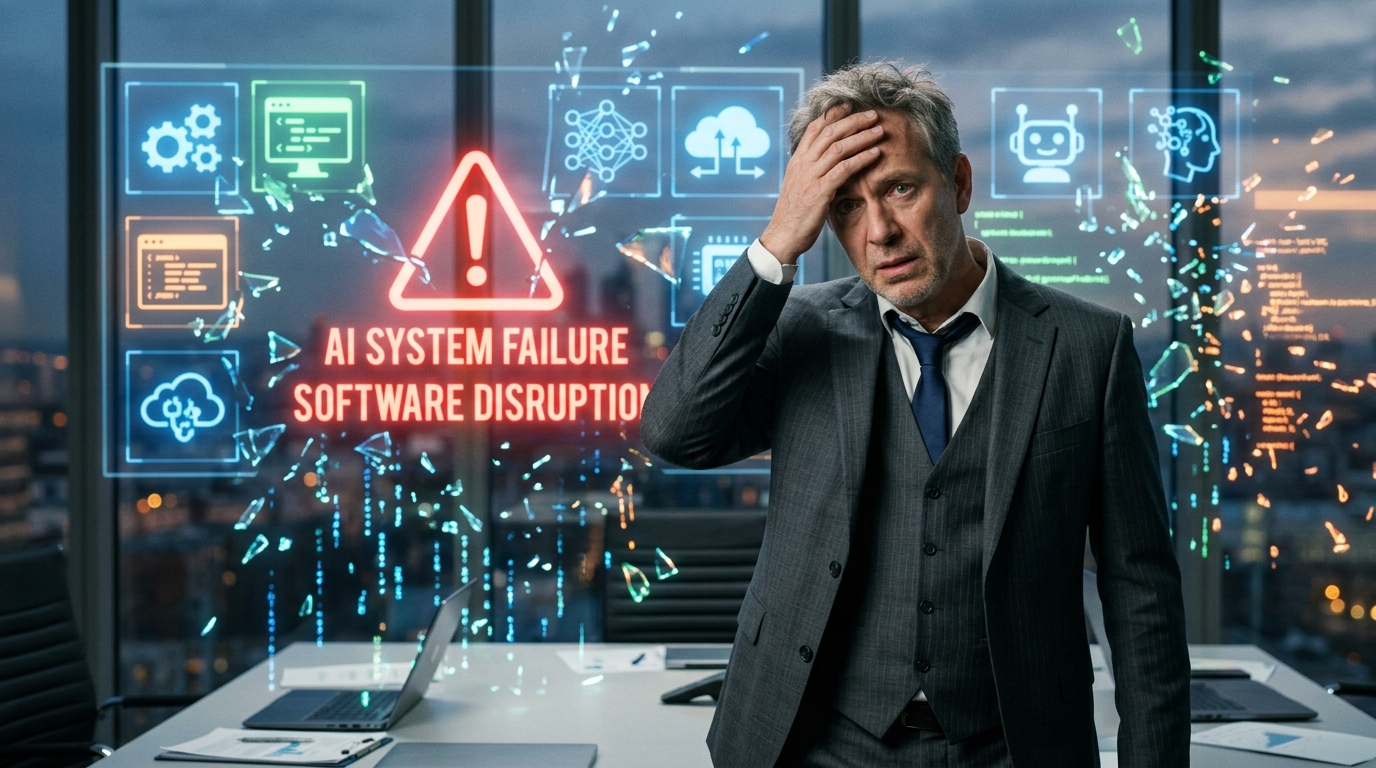

Google CEO Sundar Pichai Warns AI Could Break Nearly All Software: What It Means for Security
Sundar Pichai, CEO of Alphabet and Google, recently issued a stark warning about the accelerating pace of AI software disruption, underscoring its capacity to unsettle virtually all software-driven systems. This disruption, characterized by the infusion of advanced AI capabilities into diverse applications, is poised to reshape industries but also brings profound challenges in security, stability, and societal impact.
Pichai’s statement punctuates a growing recognition among technology leaders that AI is no longer confined to theoretical or niche applications. Instead, AI software disruption now threatens to permeate operational frameworks across sectors, from finance and healthcare to entertainment and transportation. This trend reflects not only the transformative power of AI but also the urgent need to understand its ramifications comprehensively.
At its core, AI software disruption refers to the upheaval caused by integrating machine learning models and algorithmic decision-making into existing software ecosystems. Such integration often results in unpredictable behaviors, rapid feature obsolescence, and increased complexity in maintenance. Moreover, the risks of emergent bugs and vulnerabilities multiply as AI components evolve autonomously or adapt dynamically to data inputs. This has sparked considerable concern over the security implications of AI-driven software, an area experts emphasize requires vigilant attention. For example, security breaches related to AI flaws could lead to data leaks or manipulation, underscoring the necessity for robust defense mechanisms. As Trinergy Digital highlights, best practices in software security must evolve in tandem with AI advancements to counter new classes of risks.
Despite these challenges, some experts urge a balanced perspective, pointing to AI software disruption as an opportunity for innovation rather than solely a threat. These voices advocate for proactive strategies that combine regulatory oversight, ethical design, and continuous monitoring to harness AI’s benefits while mitigating adverse effects. Industry pioneers have begun adopting frameworks to audit AI behavior systematically and ensure accountability, aiming to prevent widespread system failures or societal harms.
Nonetheless, comprehensive mitigation strategies are still emerging. Companies are increasingly focusing on rigorous testing protocols, fail-safe architectures, and transparency in AI decision-making processes. Furthermore, case studies demonstrate that clear governance models can reduce the incidence of AI-induced disruptions. The anticipated AI-driven job cuts by 2026 exemplify economic shifts requiring strategic adaptation to manage workforce transitions alongside technological disruption.
Crucially, the implications of AI software disruption extend beyond technology sectors into the realm of search and e-commerce, where agentic AI systems are influencing user experience and search engine optimization strategies. The complex interplay between AI’s actions and content discovery necessitates updated approaches to marketing and digital strategy, as detailed in analyses of agentic AI’s impact on shopping and SEO. These shifts not only affect businesses but also redefine consumer expectations.
As AI continues to mature, its disruptive capacities will likely expand, making future predictions critical for stakeholders invested in the software sector’s evolution. According to industry analysis, AI disruption is reshaping the software sector’s landscape by accelerating innovation cycles and altering competitive dynamics. This is well articulated in insights from Janus Henderson Advisors, which forecast significant transformations driven by AI adoption.
Addressing AI software disruption demands a multi-faceted approach encompassing technological, regulatory, and societal dimensions. While risks such as security vulnerabilities and systemic instability loom large, the potential for AI to revolutionize software architectures and workflows remains substantial. Policymakers and business leaders must therefore balance caution with commitment to innovation, ensuring that AI enhancements translate into reliable, secure, and ethical outcomes.
The scope and scale of AI software disruption make it a defining challenge of this era. Understanding its nuances, promoting effective mitigation strategies, and preparing for its broad-reaching effects will be essential in shaping a sustainable digital future. To explore deeper insights on AI’s influence in labor markets and tech ecosystems, readers can visit detailed discussions on agentic AI’s evolving impact, further enriching the current discourse.
As Sundar Pichai’s warning signals a pivotal moment, it is clear that AI software disruption is a phenomenon that demands ongoing scrutiny and adaptive strategies to navigate the complex terrain it presents.