
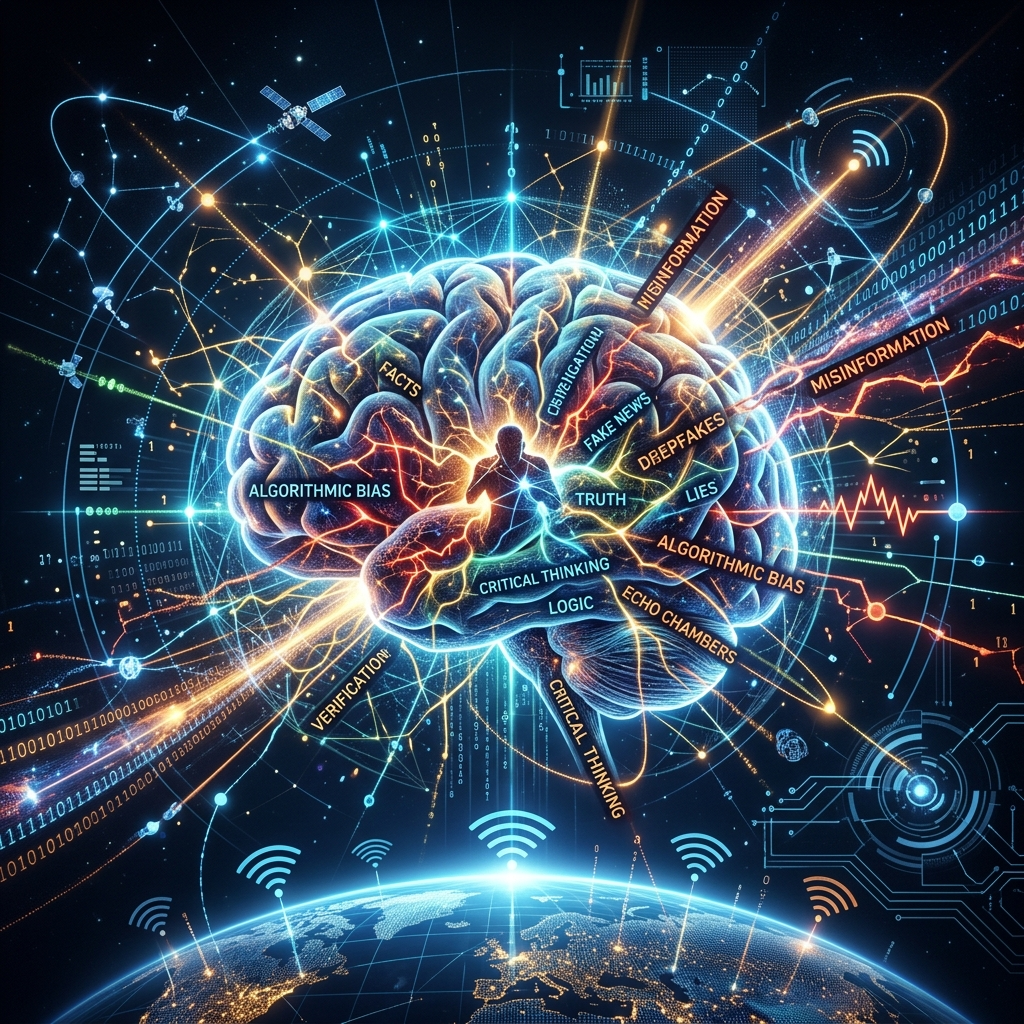

How the Internet Broke Everyone’s Bullshit Detectors: The AI and Data Reality
The internet broke everyone’s bullshit detectors by overwhelming traditional mechanisms for verifying truth with an unprecedented flood of AI-generated synthetic content and constrained access to critical geospatial data. This dynamic has reshaped how misinformation spreads and challenged the capacity of both humans and institutions to discern fact from fabrication online.
Generative AI technologies, such as GPT models and deepfake systems, have injected the digital ecosystem with convincingly fabricated material that closely mimics authentic media. This surge in hyperrealistic synthetic content disrupts established trust signals and exhausts human ability to manually verify claims, as highlighted by Search Engine Journal. Users increasingly face skepticism fatigue, a weariness that undermines confidence in digital information and enables misinformation to flourish unchallenged.
Underpinning this challenge is the ingestion of vast, often biased datasets by AI models, which generate narratives indistinguishable from reality to the average observer. This problem compounds broader technological upheavals documented in AI software disruption impacting systems, increasing strain on verification processes and complicating fact-checkers’ efforts.
Compounding verification difficulties is the restricted availability of high-resolution satellite and drone geospatial data crucial for corroborating location-based claims. Access to these datasets is limited by governments and private companies, with services such as Wing’s drone geospatial services enforcing stringent controls. This opacity creates verification blind spots, especially pronounced during crises like conflicts or natural disasters, where reliable spatial validation could counteract false narratives.
Without accessible geospatial anchors, misinformation bubbles thrive, eroding public trust in digital content authenticity. Such concerns resonate with insights from Marie Haynes’ blog on search trust, which emphasizes the necessity of dependable verification frameworks to maintain search integrity and user confidence.
In response to these challenges, agentic AI models have emerged as a promising technological advancement. These autonomous AI agents conduct independent research and verification by cross-referencing diverse data types—including text, images, and geospatial information—in real time. Their ability to detect inconsistencies before misinformation proliferates marks a significant evolution in content authenticity verification.
Google’s Antigravity project exemplifies this trend, integrating multi-modal AI verification to identify subtle fabrications across varied content forms using powerful cloud computing infrastructure. Alongside corporate efforts, open-source and subscription-based verification services are expanding, mitigating reliance on labor-intensive manual fact-checking and enabling quicker response to emerging misinformation.
Nonetheless, these technological tools cannot fully substitute for human vigilance. Strengthening digital literacy remains critical to equip users with the skills to detect manipulated media, metadata inconsistencies, and semantic anomalies. This blend of AI-driven detection and informed human analysis forms a robust defense against the spread of falsehoods.
Educational initiatives and NGOs are adopting media literacy programs aimed at combating skepticism fatigue and empowering users to apply mental frameworks for assessing authenticity before sharing information. Transparency features—such as contextual prompts and dashboard insights integrated within digital platforms—support this empowerment, facilitating more informed user judgment and engagement.
Rebuilding effective bullshit detectors in the digital age hinges on a multifaceted approach: combining agentic AI verification systems, expanding open access to geospatial data, and fostering widespread digital literacy. Progress depends on collaboration among technology creators, content platforms, policymakers, and the public to develop standards and tools that can counter misinformation’s evolving sophistication.
As AI-generated synthetic content and restricted data environments continue to shape the online landscape, the future of digital trust relies on adaptive strategies that unite cutting-edge AI capabilities with human critical thinking and ethical governance. This convergent path offers the best hope of restoring credibility and safeguarding the integrity of discourse in an increasingly complex media ecosystem.
Further advancements in AI-driven search technology promise to complement these efforts by enhancing algorithmic evaluation of content authenticity, creating a more transparent and accountable digital information space, as explored in AI-driven search technology. Meanwhile, the impact of AI-driven job cuts also underscores the broader societal shifts occurring alongside these technological evolutions. These interlinked developments emphasize the urgent need for a comprehensive, systemic response to the challenges posed by AI-driven misinformation.