
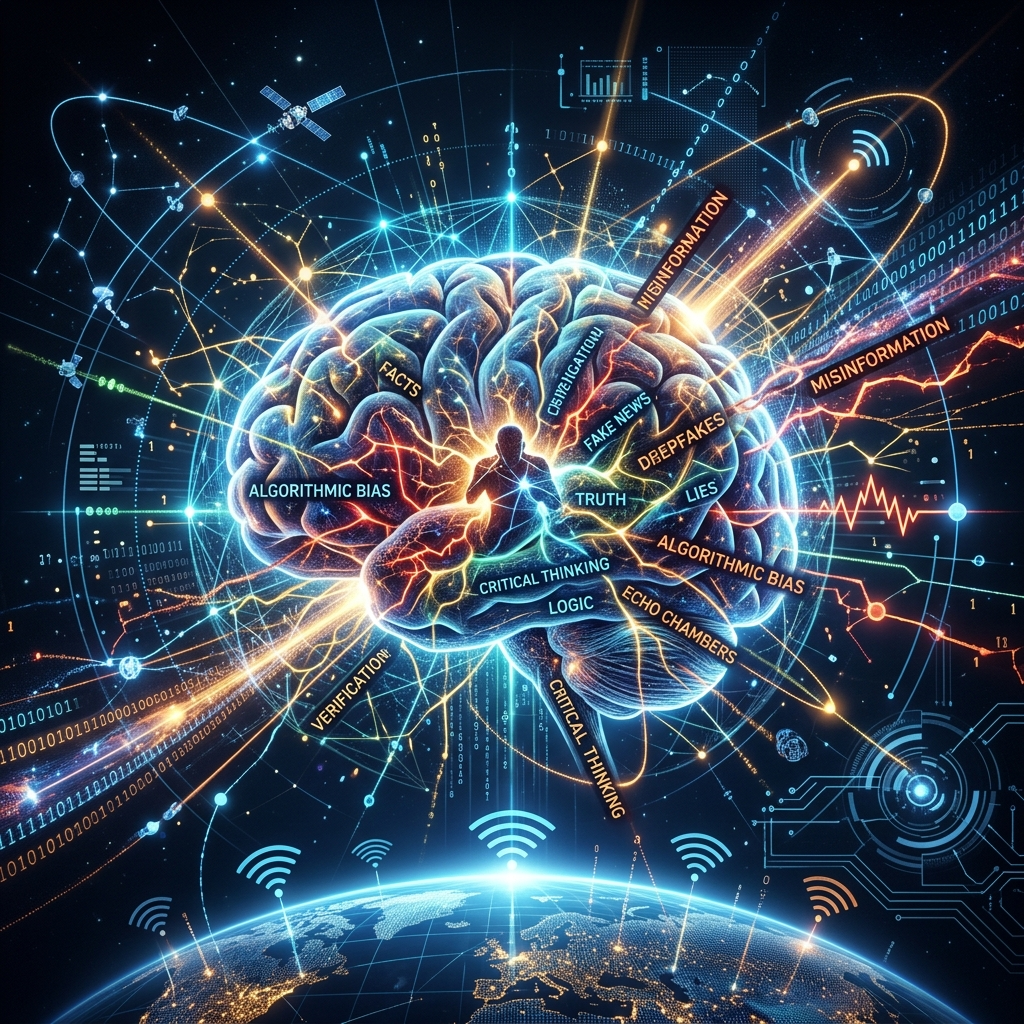

How the Internet Broke Everyone’s Bullshit Detectors: The AI and Data Reality
The internet broke everyone’s bullshit detectors by overwhelming conventional trust mechanisms with a surge of AI-generated synthetic content and restricted access to critical geospatial data. This phenomenon has complicated truth verification, exposing vulnerabilities not only in human discernment but also in existing technological systems.
Generative AI tools such as GPT and deepfake technologies have saturated online platforms with hyperrealistic fabricated content, disrupting traditional indicators of authenticity and overwhelming human verification processes. As reported by Search Engine Journal, this rapid spread of synthetic content fosters skepticism fatigue among users and erodes the foundation of digital trust. AI models, trained on extensive and often biased datasets, generate fictional narratives that closely mimic genuine materials, stretching the capacities of fact-checkers and disrupting reliable content ecosystems.
This influx of AI-generated misinformation interacts with broader technological shifts such as AI software disruption impacting systems, amplifying the challenge of verification amidst systemic complexity. As these synthetic narratives become increasingly sophisticated, they complicate the discernment process that users once relied on, effectively breaking down longstanding bullshit detectors shaped by human intuition and traditional verification heuristics.
Critical to combating misinformation is independent verification through access to high-resolution satellite and drone geospatial data. However, such data often remains tightly controlled by government and corporate entities, limiting transparency. Platforms like Wing’s drone geospatial services impose strict access restrictions, particularly during sensitive events such as conflicts or natural disasters, creating blind spots in the verification landscape. These limitations hinder the debunking of false location-specific claims, allowing misinformation bubbles to persist unchecked.
The absence of open access to geospatial anchors undermines public confidence in digital narratives and reflects challenges detailed on Marie Haynes’ blog on search trust. Without reliable, independent tools, audiences face difficulty differentiating authentic evidence from fabricated claims, weakening collective trust in online information ecosystems.
Emerging autonomous agentic AI frameworks represent a significant advance in addressing these challenges. These AI agents independently perform cross-referencing across multiple data modalities—textual content, images, and geospatial information—in real time to detect inconsistencies and flag potential falsehoods before they proliferate widely. Google’s Antigravity project exemplifies this integration, utilizing cloud computing to uncover subtle signals of content fabrication across diverse formats. Alongside this, various open-source initiatives and commercial verification services are expanding similar capabilities, easing the burden on manual fact-checkers and increasing verification scalability.
Despite these technological strides, human vigilance remains essential. Strengthening digital literacy empowers users to identify manipulated media, inconsistent metadata, and semantic oddities that AI may miss or misinterpret. Educational efforts by NGOs and institutional media literacy programs are designed to counter skepticism fatigue by equipping users with cognitive tools to apply authenticity frameworks critically before sharing information. Platforms complement this by providing transparency dashboards and contextual prompts to help users navigate complex content environments effectively.
The interplay between advanced AI verification systems and informed human oversight forms a necessary dual strategy to restore trust. Digital literacy acts as a foundation for skepticism that is informed and constructive, rather than dismissive or exhausted. This holistic approach supports a more resilient information ecosystem where AI technology amplifies human judgment rather than replaces it.
Rebuilding reliable bullshit detectors in the digital age requires a multi-pronged response. Integrating agentic AI verification, advocating for expanded access to satellite and drone geospatial data, and fostering widespread digital literacy initiatives are critical pillars. Cooperation between technology developers, platform providers, policymakers, and the public is essential to reversing misinformation trends and preserving the integrity of online discourse.
As AI-generated synthetic content and restricted data access continue to evolve, the future of digital trust depends on adaptive, integrated strategies that combine cutting-edge technological solutions with human critical thinking and ethical frameworks. This synthesis will be pivotal in shaping an online environment where authenticity can be reliably discerned and misinformation effectively countered. For deeper insights on AI’s role in search and the broader landscape, explore AI-driven search technology and for the social impact of automation see AI-driven job cuts. Additional details on how Google is impacting systems provide context to the evolving digital ecosystem.