
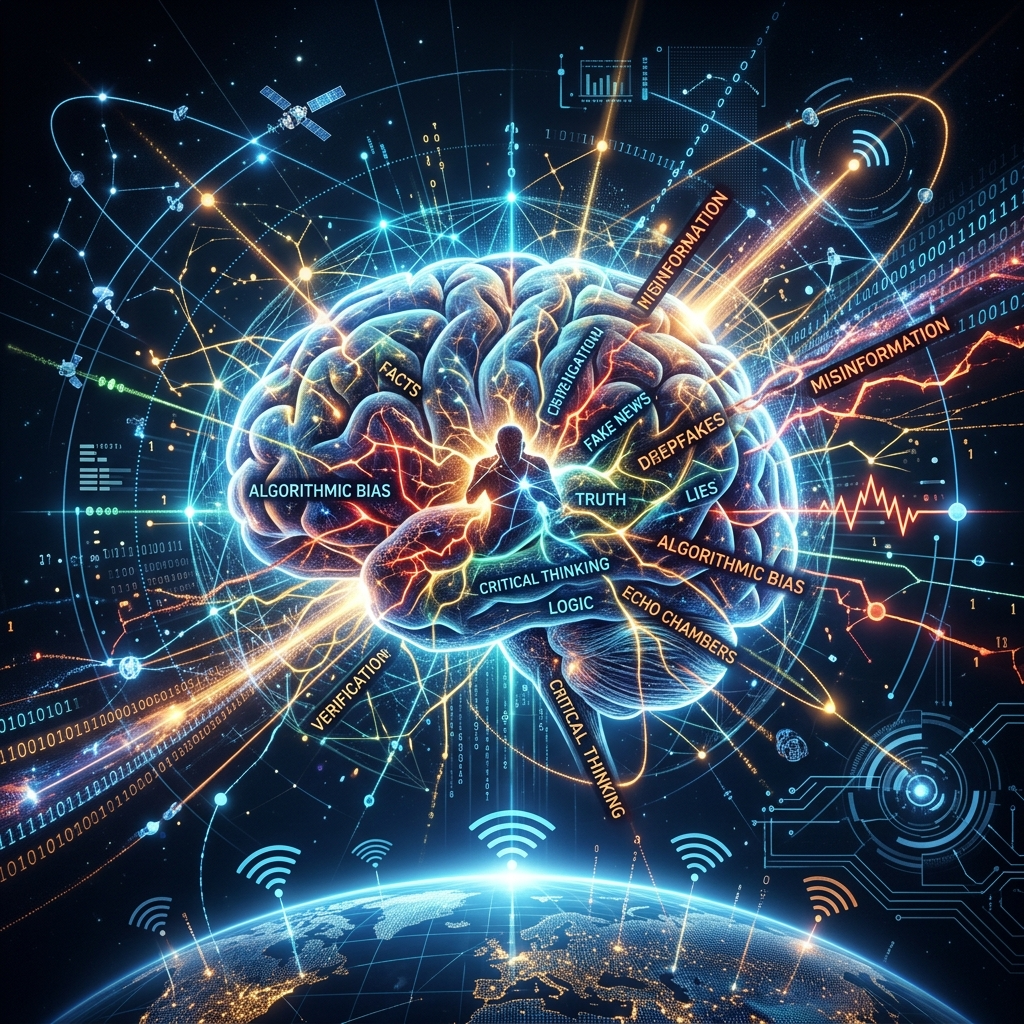

How the Internet Broke Everyone’s Bullshit Detectors: The AI and Data Reality
The internet broke everyone’s bullshit detectors by overwhelming conventional trust mechanisms with a surge of AI-generated synthetic content and restricted access to critical geospatial data. As AI models churn out hyperrealistic fabrications and governments lock down high-resolution mapping feeds, users and fact-checkers alike struggle to distinguish truth from sophisticated falsehood.

Generative AI tools such as GPT and deepfake platforms have saturated online platforms with hyperrealistic fabricated content, eroding traditional indicators of authenticity and overwhelming human verification processes. Videos of public figures uttering false statements or images of fabricated crises can spread faster than corrections. As documented by Search Engine Journal report on Google’s AI-mode shift, this rapid proliferation of synthetic material has fostered skepticism fatigue among users and strained news outlets’ fact-checking workflows.
The ingestion of vast, biased datasets by these AI systems leads to fictional narratives that untrained eyes find indistinguishable from genuine sources, stretching fact-checkers’ capacity to keep pace under tight deadlines. These models often weave partial truths with invented details, creating stories that elude rudimentary verification heuristics. This trend intersects with broader technological upheavals, including AI software disruption impacting systems, further complicating efforts to verify digital content.
Critical high-resolution satellite and drone imagery—key to independently confirming location-specific claims—remains tightly controlled by governmental and corporate stakeholders. Firms including Planet Labs and government agencies often cite security and commercial sensitivity to limit data sharing, even when lives hang in the balance. Platforms such as Wing’s drone geospatial services impose strict access limits, creating blind spots when images would otherwise corroborate or refute misleading coverage during conflicts, natural disasters, and political events. Without real-time geospatial evidence, community-driven debunking relies on outdated or low-resolution sources.
Absent reliable geospatial anchors, false location-based reports take root unchallenged, allowing misinformation bubbles to multiply and erode public trust in online narratives. In recent wildfire seasons, doctored maps claimed evacuations in unaffected zones, while unverified missile strike photos circulated during geopolitical tensions, illustrating how verification blind spots can have real-world consequences.
In response, autonomous agentic AI frameworks—systems that independently initiate and execute research and verification tasks without direct human prompts—have emerged to tackle this verification gap. These agents can parse conflicting signals, query geospatial archives, and consult cultural metadata, alerting human reviewers to anomalies. Fact-checking agencies are piloting these AI collaborators to accelerate validation cycles.
Advocates highlight Google’s AI verification initiatives as blueprints for integrating multi-modal analysis at scale, while open-source projects and subscription-based commercial services further extend these capabilities to newsrooms, NGOs, and corporate compliance teams. By standardizing APIs for image forensics, metadata vetting, and cross-database queries, these platforms reduce dependence on manual fact-checking and enable near real-time content validation across disparate channels.
Google’s Antigravity project exemplifies this approach by linking satellite imagery, social media feeds, and publication metadata through a unified AI pipeline. Early tests detected manipulated weather maps and AI-generated crowd scenes with over 90% accuracy, flagging suspicious assets before they reached millions of users.
Despite these technical advances, human oversight remains vital. Strengthening digital literacy to spot manipulated media, inconsistent metadata, and semantic irregularities complements AI-powered filters, equipping users to scrutinize information before sharing it online. When users understand basic verification markers—such as checking reverse image searches or metadata timestamps—AI flags become a first line of defense rather than a substitute for critical thinking.
Educators and NGOs have rolled out media training programs aimed at combating skepticism fatigue and improving the public’s ability to apply mental authenticity frameworks. Combined with AI-driven search technology that surfaces verified sources, and tools such as transparency dashboards and contextual prompts on social platforms, this approach further empowers readers to assess source credibility. Grassroots efforts, including community fact-checking networks and open tutorials, are teaching millions to verify claims with simple browser extensions and checklists.
Reinstating reliable bullshit detectors demands a multi-layered strategy that marries agentic AI verification, broader access to geospatial feeds, and public education on digital discernment. Regulatory frameworks and open data policies can incentivize data sharing, ensuring that researchers, journalists, and citizens gain access to the same high-fidelity imagery used by top tech firms.
As synthetic content generation and data restrictions evolve, the future of digital trust hinges on adaptive, collaborative efforts that blend cutting-edge AI with critical human judgment and ethical governance. The stakes extend beyond misinformation: preserving democratic discourse depends on restoring confidence in the information ecosystem.