
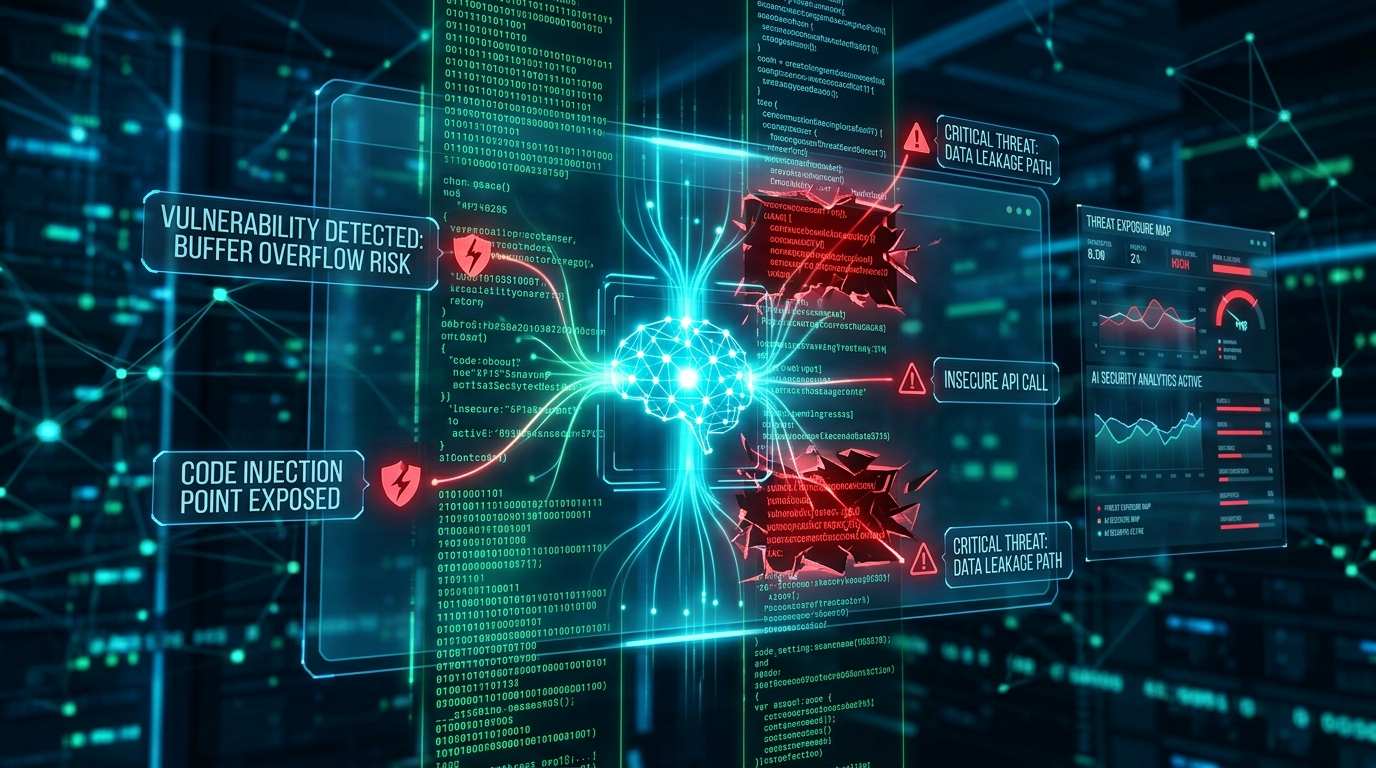

AI Risks Exposed: How AI Could Threaten Software Security
Artificial intelligence is rapidly reshaping software security, but not always for the better. AI software security faces unprecedented risks as increasingly sophisticated AI systems are exploited to compromise software integrity, revealing vulnerabilities that were previously hard to detect or exploit.
Experts caution that AI, while a powerful tool for enhancing cybersecurity, also doubles as a potent threat vector capable of breaking software defenses. This dual-edged nature is central to current debates about the impact of AI on software security, where the technology’s capacity to automatically generate, adapt, and optimize code can be weaponized by malicious actors. AI’s ability to scan codebases swiftly and identify subtle flaws has led to growing concerns about how it might be used for harmful purposes, including automated hacking and creating novel exploits.
An illustrative example comes from recent investigations into AI-assisted code vulnerabilities where tools like OpenAI’s ChatGPT have demonstrated both the promise and peril of AI in coding. As reported by NBC News, AI models can sometimes generate code containing security flaws inadvertently, which attackers can then exploit. This highlights a pressing need for more rigorous oversight and integration of AI software security practices into development pipelines.
At the technical level, AI’s capability to break software often arises from adversarial manipulation—techniques where attackers subtly alter inputs to deceive AI models into misclassifying or malfunctioning. According to an analysis by JetBrains on adversarial AI threats, these attacks can be used to bypass software protections or trigger unexpected behaviors, exposing systemic weaknesses. Such threats underscore the complexity of defending AI-enhanced systems where traditional security paradigms may fall short.
Balancing these risks, researchers are developing advanced AI cybersecurity tools designed to detect, predict, and neutralize AI-driven attacks. These tools leverage machine learning to monitor abnormal software behaviors and automatically patch vulnerabilities before exploitation happens. Yet, these emerging defenses must evolve rapidly to keep pace with the innovative tactics deployed by threat actors using AI.
The stakes extend beyond individual applications to entire sectors relying on software systems, including critical infrastructure and enterprise environments. The potential for AI to disrupt software ecosystems is well documented in discussions around AI’s systemic impact. For instance, detailed commentary on AI software disruption impacting systems explores how such vulnerabilities could cascade into broader failures if unchecked.
Industry leaders have echoed these concerns. Sundar Pichai, CEO of Google, has emphasized the urgent need to integrate robust security frameworks with AI development to mitigate risks. Supporting this view, aspects of Google’s strategy to handle AI disruption show the company’s efforts to safeguard software in this new paradigm, as covered in Google disruption impacting systems.
Furthermore, the ramifications for the workforce through AI-driven job shifts add another layer of complexity. The interplay between AI’s role in job automation and software security presents intertwined challenges, highlighted in analyses like AI-driven job cuts 2026, pointing to broader societal impacts linked with technological disruption.
Projects such as Anthropic’s open-source White Glasswing showcase collaborative efforts to uncover AI-induced vulnerabilities more transparently, fostering a community-based approach to software hardening. CyberScoop’s coverage of Project Glasswing presents an example of how open-source initiatives are critical in addressing the nuances of AI’s evolving threat landscape.
In summary, AI software security is at a crossroads. The technology’s ability to both fortify and fracture software systems demands nuanced strategies combining technical rigor, ethical stewardship, and policy frameworks. As threats continue to evolve, so must defenses, with a proactive approach essential to safeguarding the digital infrastructure underpinning modern life.