
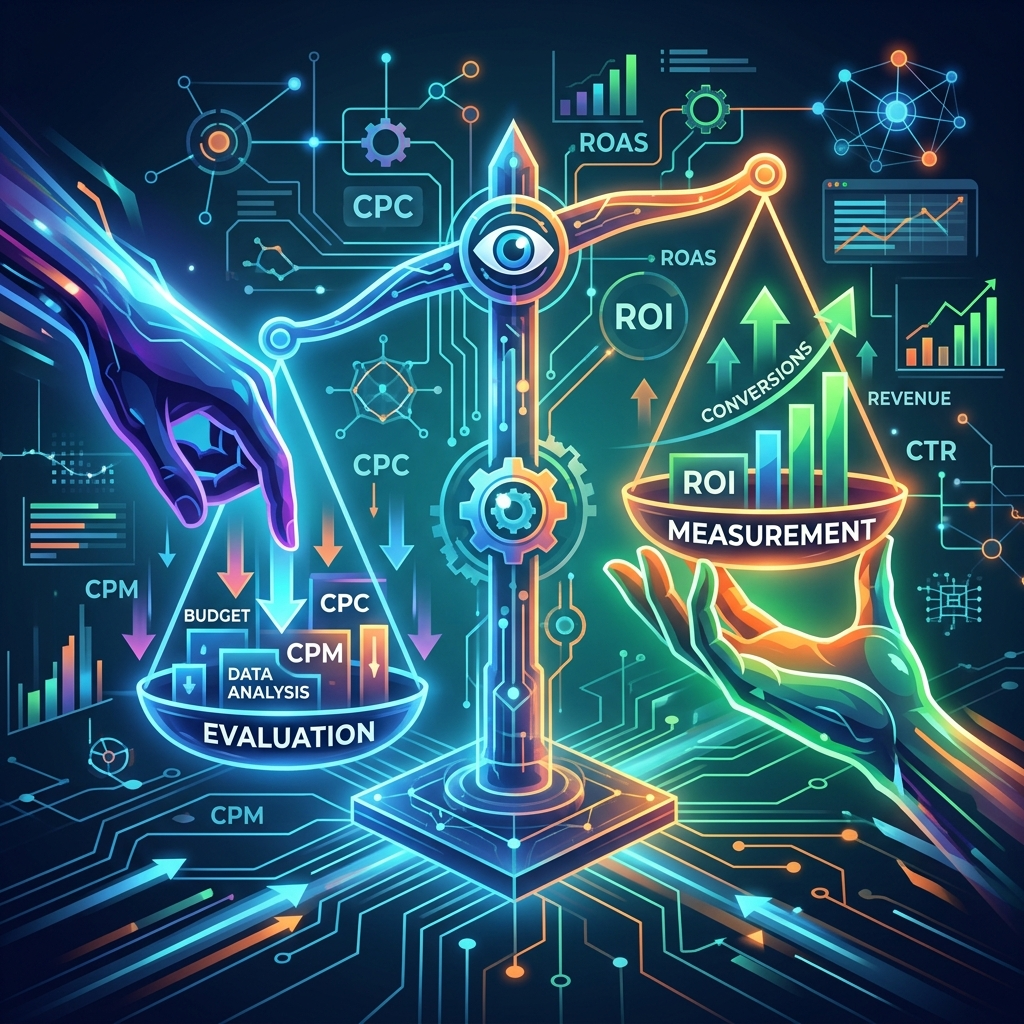

Measuring PPC Performance in the AI-Driven Advertising Landscape
PPC performance measurement is undergoing a fundamental transformation as artificial intelligence increasingly drives advertising strategies. Traditional metrics and methods are no longer sufficient to capture the full impact of pay-per-click campaigns in an AI-automated landscape, challenging marketers to adopt new frameworks that prioritize profitability, incrementality, and data quality.
AI automation has reshaped how PPC campaigns operate, enabling algorithms to optimize bids and targeting with unprecedented efficiency. This shift has increased campaign complexity, making it harder to rely solely on familiar indicators such as return on ad spend (ROAS) or click-through rates. Instead, advertisers must understand not just how much they spend or earn, but how their investments propagate through customer journeys across multiple touchpoints.
Traditional PPC metrics often fall short in this environment because they focus narrowly on immediate transactional outcomes. They fail to distinguish between demand capture—converting intent already present—and demand creation, where marketing efforts actively generate new consumer interest. This distinction is crucial in AI-driven campaigns, where automation continuously reallocates budgets to maximize returns, potentially skewing reported performance.
To address these challenges, marketers are adopting measurement frameworks that integrate profitability analysis, incrementality testing, and blended customer acquisition cost (CAC) calculations. Profitability emerges as a superior metric to ROAS, as it accounts for all campaign costs and downstream effects on revenue and margins, providing a more comprehensive view of campaign success.
Incrementality testing plays a vital role in separating the true impact of PPC efforts from conversions that would have happened without paid ads. By running controlled experiments, advertisers can identify whether AI-driven optimizations are genuinely creating new demand or merely shifting conversions from one channel to another, improving budget allocation decisions.
Furthermore, blended CAC recognizes that customer acquisition happens across both paid and organic channels. Combining these data sources into a unified metric helps businesses understand the full cost of bringing a customer on board, reflecting the intertwined nature of marketing influences in today’s hybrid digital ecosystem.
Central to all these advances is the quality of first-party data. Accurate, comprehensive data about customer behaviors and interactions enables AI models to optimize targeting and measurement more effectively. Without reliable first-party data, AI-driven campaigns risk suboptimal decisions based on incomplete or erroneous signals, undermining PPC performance measurement efforts.
As AI assumes a larger role in PPC management, reporting to stakeholders must also evolve. Marketers need to communicate not just metrics but the underlying insights about profitability, customer acquisition dynamics, and incremental growth. Such reports should highlight the benefits and limitations of AI automation, managing expectations while showcasing strategic value.
These developments come at a time when consumer behavior itself is changing. According to Google, the consumer decision-making process is increasingly complex, influenced by multiple digital and offline factors that PPC campaigns must address to remain effective. Moreover, Boston Consulting Group emphasizes moving beyond the linear funnel model, suggesting marketers embrace comprehensive attribution approaches to understand advanced customer journeys.
Challenges persist, including adapting measurement to emerging formats such as zero-click searches, where consumers get answers directly from search engine results pages without clicking through. SparkToro’s recent study revealed that for every 1,000 U.S. Google searches, only 374 clicks go to the open web, underscoring the need for innovative PPC measurement techniques that capture these new interaction modes.
As advertisers explore these evolving landscapes, they must continuously refine their PPC performance measurement strategies to keep pace with AI’s transformative potential. Understanding profitability over simplistic ROAS, incorporating incrementality tests, blending CAC, and leveraging high-quality first-party data will become standard practices for those aiming to optimize AI-driven campaigns effectively.
For deeper insights into the shifting role of AI in PPC campaign management, see perspectives on the concerns around AI in PPC, explore expert views on the evolving PPC manager role with AI, and how budgets are adapting in AI-driven budget rebalancing.