
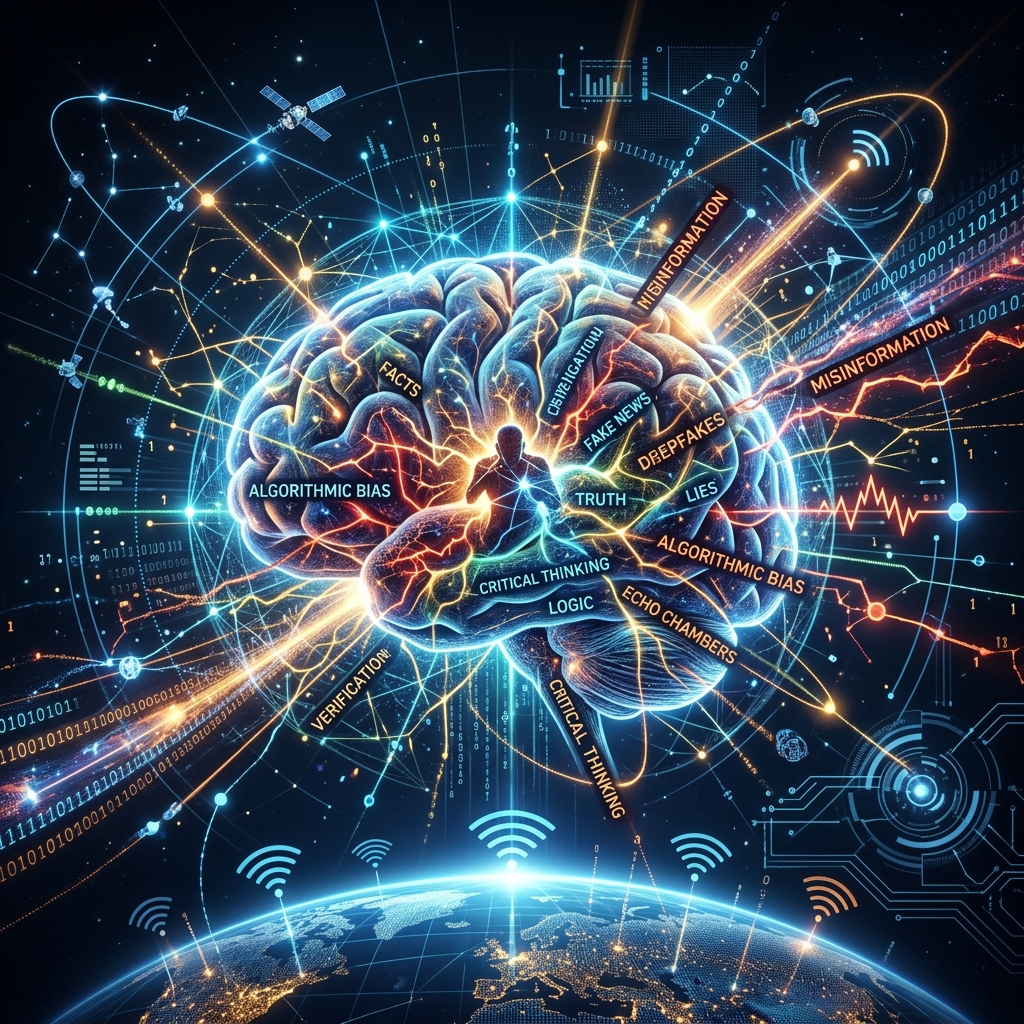

How the Internet Broke Everyone’s Bullshit Detectors: The AI and Data Reality
The internet broke everyone’s bullshit detectors by overwhelming conventional trust mechanisms with a surge of AI-generated synthetic content and restricted access to critical geospatial data. This transformation has challenged how users validate information, reshaping the landscape of digital trust and misinformation verification.
Generative AI tools such as GPT and deepfake technologies have created an explosion of hyperrealistic fabricated content online, disrupting traditional markers of authenticity. These advances have flooded social media and news platforms with images, videos, and text difficult to distinguish from reality, leading to a form of skepticism fatigue among users. As Search Engine Journal highlights, this surge in synthetic content strains human verification processes and erodes confidence in digital information.
The AI models that generate this content depend on vast datasets, often containing inherent biases and misinformation themselves. This results in fictional narratives becoming indistinguishable from genuine accounts to untrained eyes, pushing fact-checkers to their limits. Such challenges compound alongside broader technological disruptions in software systems as detailed in AI software disruption impacting systems, further complicating the verification ecosystem.
Beyond content creation, restricted access to high-resolution satellite and drone data poses a significant barrier to verifying location-specific claims independently. Geospatial data crucial for anchoring factual information is tightly controlled by governments and companies. Services like Wing’s drone geospatial services illustrate this access limitation, especially problematic during events such as armed conflicts or natural disasters.
Without open availability of such geospatial data, misinformation that relies on false location or event claims often goes unchallenged, allowing falsehoods to proliferate uncontested. This lack of transparency weakens public trust in digital narratives, underscoring concerns addressed by experts in Marie Haynes’ blog on search trust.
In response, emerging autonomous agentic AI models offer a new front in combating misinformation. These AI systems perform independent research and verification, cross-referencing textual, visual, and geospatial data in real time to detect contradictions and potential fabrications before they gain traction.
Google’s Antigravity project exemplifies this approach, combining multi-modal AI verification with cloud-based computing power to identify subtle signs of synthetic content across media types. This innovation, along with open-source and commercial verification tools, promises to alleviate reliance on manual fact-checking workflows.
Yet, technology alone is insufficient to restore trust. Human vigilance remains essential in this evolving environment. Strengthening digital literacy equips users to identify manipulated media, inconsistencies in metadata, and semantic anomalies. This education complements AI detection capabilities, empowering users to become active gatekeepers against misinformation.
Educational initiatives and NGOs are increasingly promoting media literacy training to combat users’ skepticism fatigue and improve critical evaluation skills. Platforms deploy transparency dashboards and contextual prompts to help users assess information authenticity, reinforcing mental frameworks for reliability assessment prior to sharing.
This combination of technological innovation and enhanced human critical thinking forms a crucial paradigm for rebuilding trustworthy digital ecosystems. As noted in analyses of AI-driven search technology and workplace impact such as AI-driven job cuts, the intersection of AI advancement and societal adaptation defines the trajectory of future information reliability.
In conclusion, restoring effective bullshit detectors online demands a multi-layered strategy. Integrating agentic AI verification systems, expanding access to critical geospatial data, and fostering widespread digital literacy initiatives form the backbone of this effort. Collaboration across technology developers, policymakers, content platforms, and the public is essential to reverse misinformation proliferation and safeguard the integrity of online discourse.
As AI-generated synthetic content and restricted data landscapes evolve, the future of digital trust hinges on adaptive strategies that blend cutting-edge technologies with human ethical oversight and critical literacy skills to maintain authenticity in an increasingly complex information environment.